

The gold standard for luxury decorated eggs is Faberge, and with this step-by-step guide you can make your own Faberge-style egg at home. This design draws on the signature gold latticework the eggs are famous for, set with Serinity flatback rhinestones, finished with a Preciosa crystal cup-chain band and a jewelled rondelle topper.
It is a more advanced project than a simple bedazzle, but every step is straightforward, and the finished egg makes a striking display piece or gift. Below is everything you need, with quantities, then the full method. Treat the colours here as a starting point and explore your own palette.
Project at a glance
- Difficulty: Intermediate
- Time: 3 to 5 hours, plus drying time between stages
- Crystals used: Serinity flatbacks with Preciosa cup chain and a rondelle topper (a multi-brand build)
- Best crystal type: Non-hotfix flatbacks, glue-set with Gem Tac
What you'll need
Quantities suit a standard craft egg, so scale them to your egg and design. Add the crystals, cup chain, topper, glue and tools to your cart from the cards below. The picker and tray are reusable across every project, so browse the full range of tools and accessories to build your kit.
- Plastic egg, colour of your choiceYour base1
- Gold acrylic paintLattice lines and legs1
- Serinity SS20 Flatbacks, Topaz ShimmerLattice intersections80
- Serinity 2304 Raindrop 6mm, Crystal Golden ShadowConnecting the lattice120
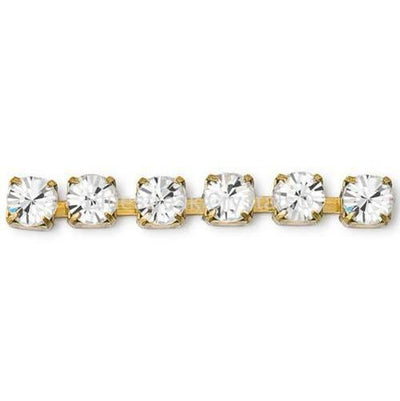
- Preciosa Gold Cup Chain SS12, CrystalCentre band15cm
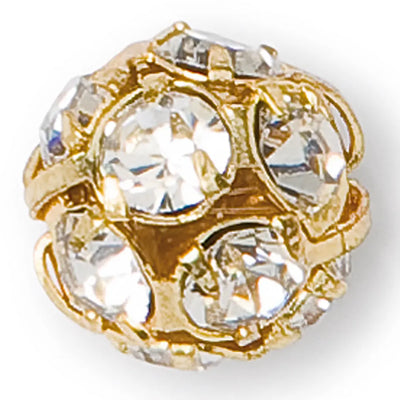
- Preciosa Gold Plated Rondelle Ball 18mm, CrystalTopper1
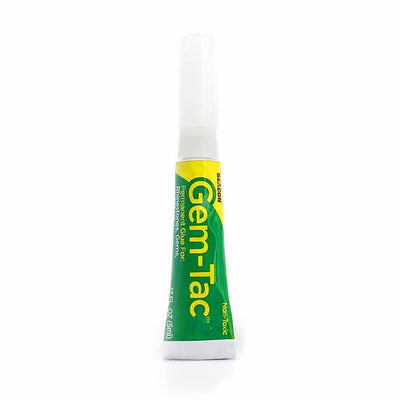
- Gem Tac GlueAdhesive1
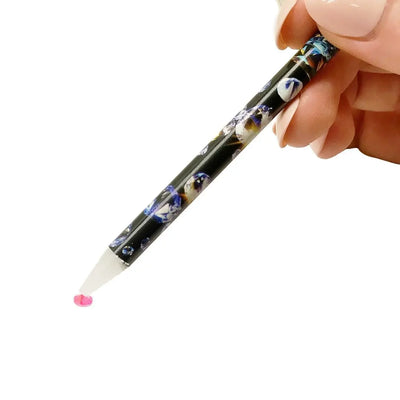
- Wax Crystal Picker ToolPlacing crystals1
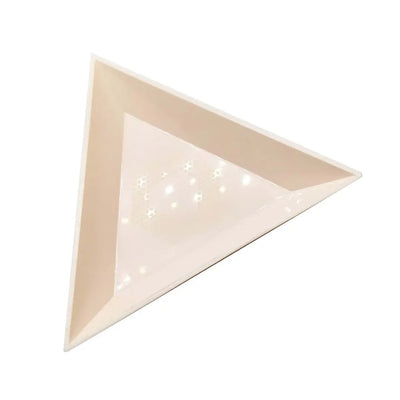
- Magic Sorting TrayOrganising crystals1
- Plastic forkFor the legs1
Shop this project
Everything you need for this build. Quantities are a guide, so adjust to your design.

From £3.05 ex VAT

From £2.42 ex VAT
£1.95 ex VAT
£5.12 ex VAT
Not sure how many crystals you need? Use our Crystal Calculator to estimate by surface area.
How to make a Faberge-style egg
Step 1: Paint the lattice
Use the gold acrylic paint to draw the lattice pattern around the egg. Leave at least 1cm between the lines, as this is where the crystals will sit once the paint is dry. Let it dry fully before gluing anything down.
Step 2: Add the cup-chain band
Using Gem Tac, run a thin line of glue across the middle of the egg. Wait a few moments for it to turn tacky, then lay the Preciosa cup chain over the line and hold it in place until it sets.
Step 3: Set the intersections
Glue one SS20 Topaz Shimmer flatback over every point where the gold lattice lines cross. Use the Wax Crystal Picker Tool to lift and place each stone neatly.
Step 4: Connect the lines
Glue the 2304 Golden Shadow teardrop stones along the gold lines that connect the intersections. The teardrop is wider at one end, so face them all the same way to give the lattice a sense of flow.
Step 5: Add the topper
Use Gem Tac to fix the 18mm rondelle ball to the top of the egg as a crowning jewel.
Step 6: Make the legs
Cut the prongs from a plastic fork at their base, then use a controlled heat source to gently melt and curl the ends. Make three or four so the egg has even support. Work in a ventilated space and take care with the heat.
Step 7: Attach and finish the legs
Glue the legs to the base of the egg, spacing them evenly so it stands level without toppling. Paint them gold to match the lattice and leave to dry.
Frequently asked questions
What makes this a Faberge-style egg?
It takes inspiration from the famous Faberge eggs, which are known for their ornate gold latticework and jewelled detail. This project recreates that look with a painted gold lattice, crystals at the intersections and a cup-chain band, on an affordable plastic egg base.
What glue should I use for a crystal egg?
Gem Tac is ideal here. It is a water-based, flexible craft glue that dries clear and grips both the smooth plastic egg and the crystal backs, and it gives you a few moments of working time to position cup chain and stones neatly.
How many crystals do I need for a Faberge egg?
This lattice design uses roughly 80 SS20 round flatbacks at the intersections and around 120 teardrop stones along the lines, plus a short length of cup chain. Adjust to your egg size and pattern, and use our Crystal Calculator to estimate other designs.
Can I use a real egg or a different base?
A plastic egg is best, as it is light, durable and will not crack or rot. You can also use wooden or polystyrene craft eggs. A real blown egg is too fragile to handle the gluing and the weight of the crystals.
Which crystals work best for this project?
We used Austrian-made Serinity flatbacks with Preciosa cup chain and a rondelle topper here, which give a rich gold-and-crystal finish. You can step up to premium Swarovski or down to budget Estella, depending on the finish you want.
How do I make the egg stand up?
Cut the prongs from a plastic fork, gently curl the ends with a controlled heat source, then glue three or four evenly spaced legs to the base so the egg sits level. Take care with the heat and work in a ventilated space.
Make it your own
The lattice is just one classic Faberge motif. Try different colourways, swap the gold for silver or rose-gold cup chain, or vary the stone shapes to make an egg that is entirely yours. For more decorative crystal craft, see our crystal sun catcher and Christmas bauble projects, or explore the full Craft Studio.


