

A birthstone colour scheme gives any piece of jewellery a personal touch, which is what makes birthstone earrings such a thoughtful gift. This guide shows you how to make a simple pair using Swarovski birthstone crystals, with the colour chosen to match the wearer's month of birth. We have used Aquamarine for March as the worked example, but the same steps work for any birthstone shade.
As an official Authorised Swarovski Distribution Partner, we supply the full genuine Swarovski colour range direct from Austria, with reliable colour matching across batches, so the birthstone shade stays true. The make itself is beginner-friendly: a few beads on a headpin and one simple loop. Here is everything you need, then the steps.
Project at a glance
- Difficulty: Beginner, a great introduction to wired beadwork
- Time: Around 30 minutes for the pair
- Crystals used: Swarovski 5328 bicone beads in your birthstone colour, shown here in Aquamarine
- Technique: Threading a beaded headpin and turning a simple loop
What you'll need
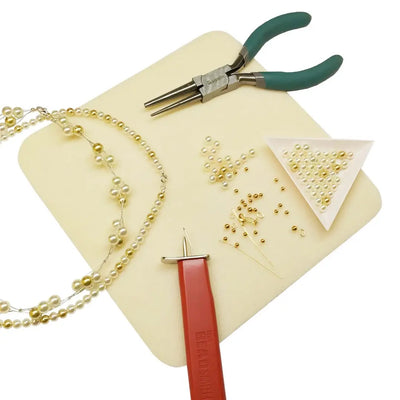
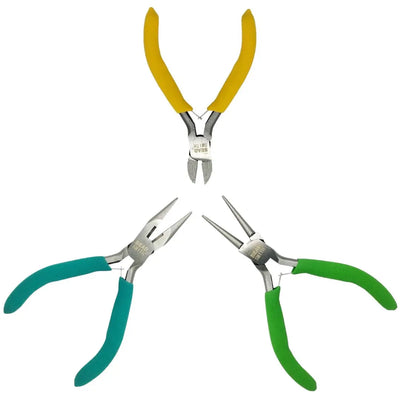
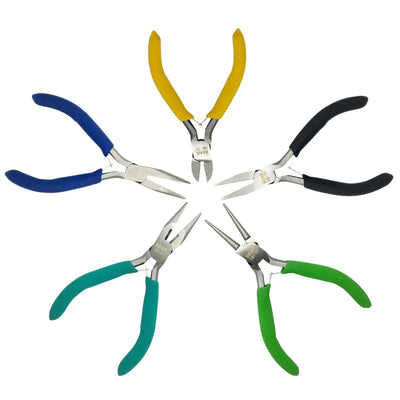
The quantities below make one pair. Swap the bicone colour for the birthstone you want, then add the beads and findings to your cart from the cards underneath. The pliers are reusable across every jewellery project, so browse the full range of tools and accessories to build your kit.
- Swarovski 5328 Bicone Bead, 6mm, in your birthstone colourThe main stone, Aquamarine shown2
- Swarovski 5328 Bicone Bead, 4mm, in your birthstone colourThe accent stone2
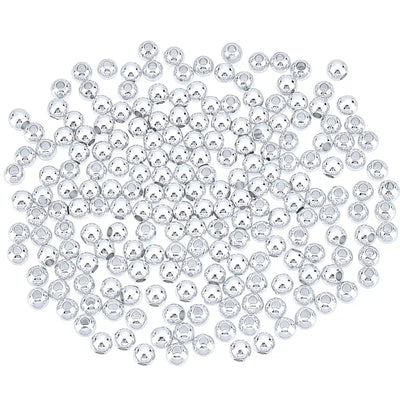
- Silver Plated Smooth Round Beads, 2.5mmSpacers between the crystals6
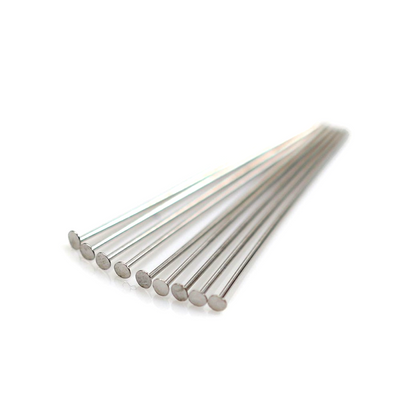
- Silver Plated Flat End Headpins, 1 inchThe body the beads sit on2
- Silver Plated Open Jump Rings, 4mmLinking the drop to the ear wire2
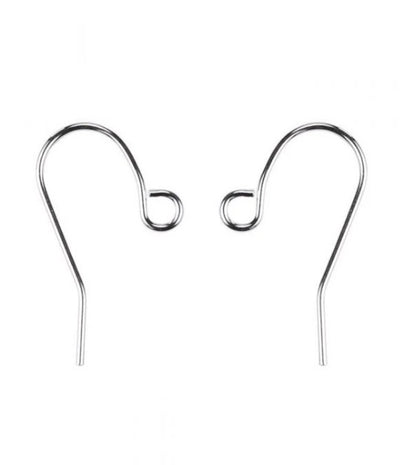
- Silver Plated Fish Hook Ear WiresFor hanging the earrings1 pair
Shop this project
Everything you need for this build. Quantities are a guide, so adjust to your design.

£3.50 ex VAT
£1.76 ex VAT
£9.20 ex VAT
£15.33 ex VAT
Not sure how many crystals you need? Use our Crystal Calculator to estimate by surface area.
How to make birthstone earrings
Step 1: Thread the beads
Take a headpin and thread the beads on from the flat end upwards: a 2.5mm silver bead, then the 6mm bicone, then a second silver bead, then the 4mm bicone, and finally a third silver bead. The little silver beads sit between the crystals as spacers and frame them neatly.
Step 2: Turn the loop
Trim the wire to about 1cm above the top bead. Using chain nose pliers, make a right-angle bend close against the bead, then grip the wire end with round nose pliers and roll it over into a loop, holding the beads steady with your thumb. Keep turning until you have a neat loop centred above the beads.
Step 3: Attach the ear wire with a jump ring
Open a jump ring by gripping it with two pliers and twisting the ends in opposite directions, never pulling them apart. Thread the jump ring through both the headpin loop and the ear wire loop, then twist it closed again. The jump ring lets the drop swing freely from the ear wire.
Step 4: Make the matching earring
Repeat every step to build the second earring, checking it against the first so the pair matches in length and bead order. Give both loops and jump rings a gentle squeeze to confirm they are closed, and your birthstone earrings are ready to wear or gift.
Frequently asked questions
How do you make birthstone earrings?
Thread a silver spacer, a 6mm bicone, a silver spacer, a 4mm bicone and a final spacer onto a headpin, then turn a loop at the top with round and chain nose pliers. Link the loop to a fish hook ear wire with a jump ring, then repeat for the second earring. Choose the bicone colour to match the birthstone.
What are the birthstone colours by month?
The usual modern guide is: January garnet red, February amethyst purple, March aquamarine blue, April clear crystal, May emerald green, June soft lilac or pearl, July ruby red, August peridot green, September sapphire blue, October rose or opal pink, November topaz yellow, and December turquoise or tanzanite blue.
Which Swarovski crystal colours match birthstones?
Most birthstones map neatly to a Swarovski shade: Aquamarine for March, Amethyst for February, Emerald for May, Light Siam or Ruby for July, Peridot for August, Sapphire for September and Topaz for November. For April, plain Crystal stands in for diamond. Matching the shade to the stone is what makes the earrings personal.
How do you open a jump ring without weakening it?
Hold the jump ring with two pairs of pliers, one each side of the gap, and twist one hand towards you and the other away so the ends move sideways past each other. Never pull the ends straight apart, as that distorts the ring and weakens the metal. Reverse the twist to close.
Can I use pendants or different beads instead?
Yes. The concept adapts easily to crystal pendants or different bead shapes, as long as the colour stays true to the birthstone. You can also vary the bead sizes or add more spacers to lengthen the drop, so the same method scales from simple studs to longer statement earrings.
What components and sizes do I need for one pair?
For two earrings you need two 6mm bicone beads, two 4mm bicone beads, six 2.5mm silver spacer beads, two one-inch flat end headpins, two 4mm jump rings and one pair of fish hook ear wires. You will also need chain nose and round nose pliers, which are reusable for future makes.
Make it your own
Birthstone earrings are an easy starting point for a personalised jewellery set. Keep the same loop technique and build out a matching collection: see how to make daisy chain earrings and a heart pendant necklace, or browse the full Craft Studio for more makes.


